
FlowHerFlowHer
  • 简体中文
  • English
  • 简体中文
  • English
  • Understanding Your Cycle

    • How does your body work across the menstrual cycle?
    • What kind of menstrual cycle counts as "regular"?
    • Does an irregular period always mean something is wrong?
  • Body State

    • What is Body State, and why is it more important than dates?
    • What can a low Body State feel like?
    • Can Body State improve?
    • Body State Explained
  • Stress And Mental State

    • Stress is not just emotion: what is physical stress?
    • What is HRV, and why can it reflect your stress state?
    • How does stress disrupt menstrual rhythm?
    • Real-Time Stress Explained
  • Sleep And Recovery

    • Sleep Quality Explained
    • Sleep quality affects your period more than you think
    • How can better sleep support a healthier, more regular period?
  • PMS And Premenstrual Discomfort

    • What is PMS, and why does it feel different for everyone?
    • Why do mood swings, fatigue, and irritability happen before your period?
    • How can FlowHer help you prepare for PMS earlier?
  • Period Pain

    • Is period pain normal, and why does it vary each time?
    • How to ease period pain
    • The relationship between stress, sleep, and period pain
  • Nutrition, Weight And Movement

    • Why does appetite change before your period?
    • How to eat for a more comfortable period: iron, protein, and fiber
    • Should you worry about weight fluctuation around your period?
    • When is it better to move, and when is it better to rest?
  • Reproductive Health And Care

    • Vaginal discharge and intimate care: what changes are normal?
    • Ovulation body signs: discharge, temperature, and mild pain
    • HPV vaccine and cervical screening: what you need to know
  • Mental Health

    • Period-related low mood: when should you seek help?
  • Sexual Function Health

    • Why libido can change with the menstrual cycle
    • Pain with sex and cycle-related discomfort: when to pay attention
  • Body Health

    • Is breast tenderness before your period normal?
    • Period acne and skin changes: why breakouts happen at the same time
    • Are oily hair, shedding, and the menstrual cycle related?
  • When You Wonder If You Are Normal

    • When You Wonder, "Am I Normal?"
  • Product

    • FlowHer Product Overview
    • FlowHer Frequently Asked Questions
    • FlowHer User Agreement
    • FlowHer Privacy Policy

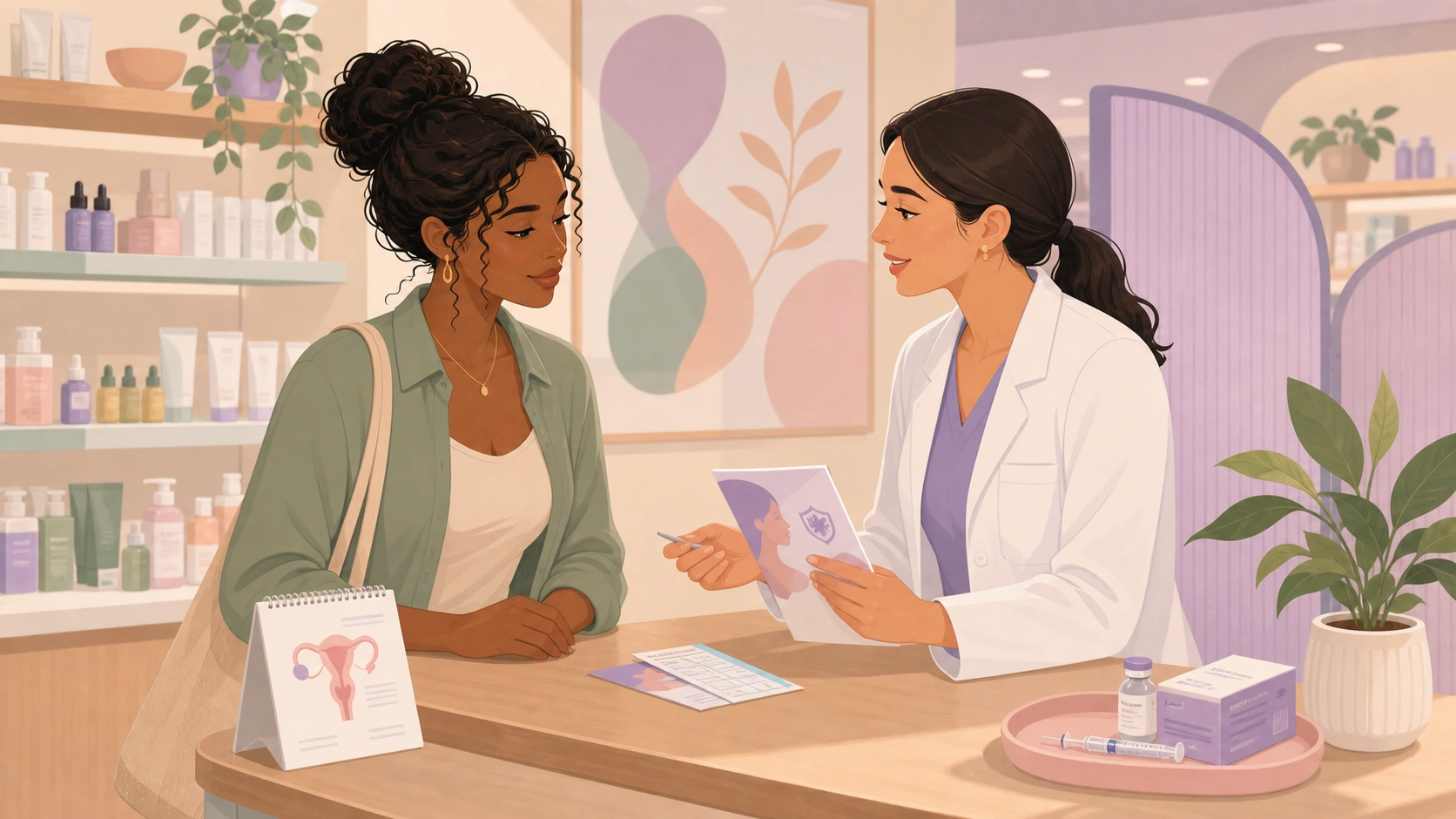
A woman consulting about HPV vaccination and cervical screening at a pharmacy

HPV vaccine and cervical screening: what you need to know

How HPV relates to cervical cancer

HPV, or human papillomavirus, is a group of common viruses. Some high-risk HPV types are related to higher risk of cervical, vaginal, and vulvar cancers. HPV infection is common, and most infections clear on their own, but persistent high-risk infection can lead to cervical cell changes [1][2].

Cervical health management usually includes two parts:

  • HPV vaccination: lowers the risk of infection with certain high-risk HPV types.
  • Cervical screening: uses HPV testing and/or Pap testing to find cell changes that could become precancerous.

HPV vaccination is not meaningful only at a very young age

CDC recommends routine HPV vaccination at ages 11-12, and it can start at age 9. Catch-up vaccination is generally recommended through age 26 for people not already vaccinated [1]. For adults ages 27-45, vaccination should be discussed with a clinician based on individual risk, because many people have already been exposed to HPV and benefit varies [1].

Having had sex or having had one HPV type does not mean vaccination has no value. But the vaccine does not treat an existing infection or lesion. The decision is best made with a clinician based on age, vaccination history, partner context, and screening results.


Women of different ages understanding cervical screening in a clinic waiting area

When cervical screening starts

Guidelines differ by country and region. Based on CDC and ACOG information in the United States:

  • Cervical cancer screening starts at age 21.
  • Ages 21-29 usually use Pap testing.
  • Ages 30-65 may use Pap testing, HPV testing, or co-testing, depending on clinician guidance.

Specific screening intervals should follow local medical guidelines and your clinician's advice [2][3].


What FlowHer can and cannot do

FlowHer can help you record periods, abnormal bleeding, discharge changes, pain, and screening reminders. It cannot replace HPV testing, Pap testing, colposcopy, or medical diagnosis.

If you notice bleeding after sex, repeated non-period bleeding, abnormal discharge, pelvic pain, or abnormal screening results, seek medical care promptly.


References

  1. CDC: Reducing Risk for Cervical Cancer
  2. CDC: Screening for Cervical Cancer
  3. ACOG: Cervical Cancer Screening
Last Updated: 5/3/26, 11:18 AM
Prev
Ovulation body signs: discharge, temperature, and mild pain