
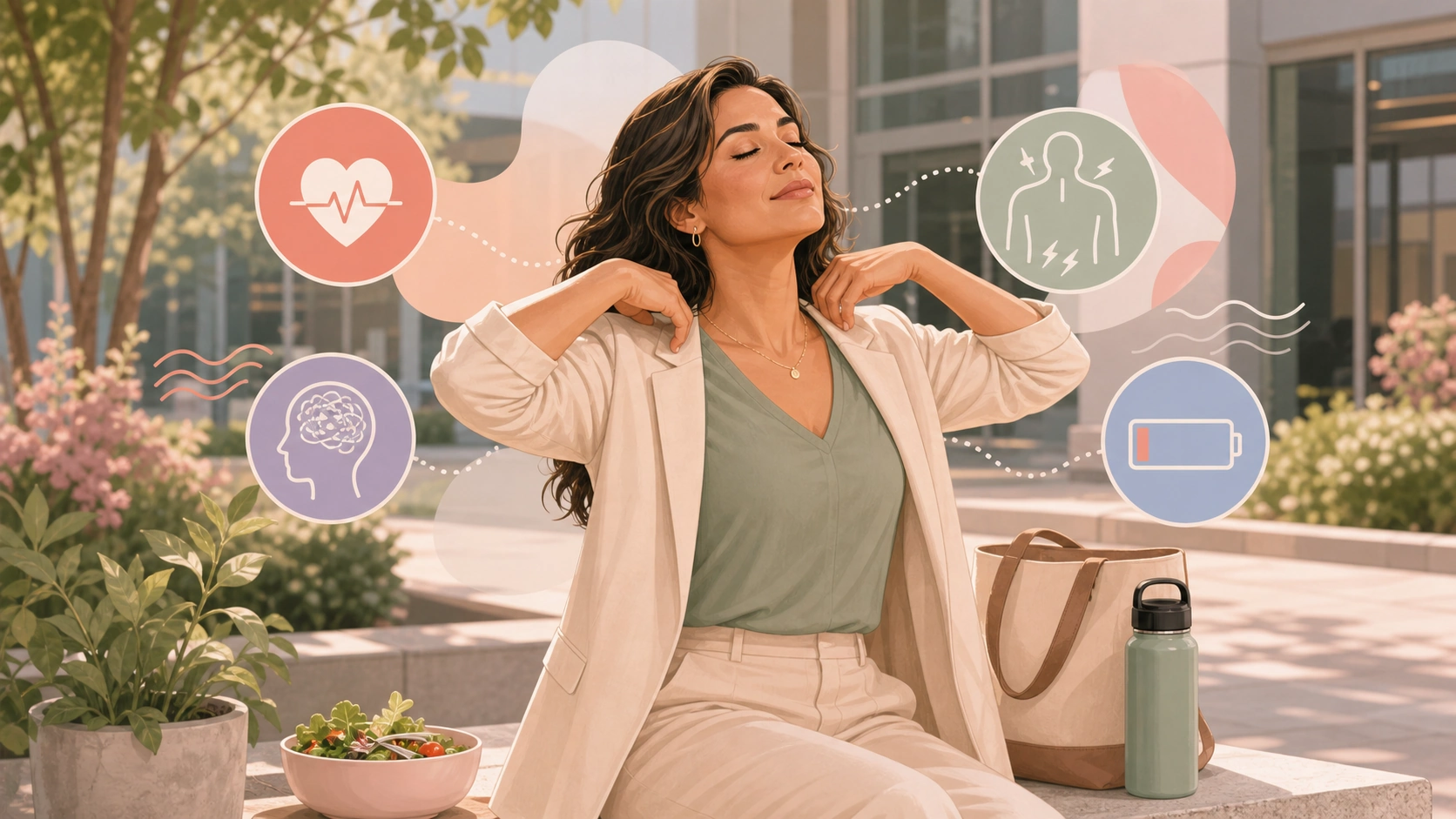
Stress is not just emotion: what is physical stress?
Stress is often simplified as "feeling mentally uncomfortable" or "feeling tense," but scientific research shows that it is a systemic physiological response, not only an emotional experience. Understanding physical stress can help us recognize health signals more clearly and take effective steps to prevent long-term strain.
Stress is not the same as anxiety
Stress is the body's integrated response to any stimulus or demand that changes homeostasis. It includes both physiological and psychological feedback mechanisms. Through the autonomic nervous system and endocrine axes, the body mobilizes resources to adapt to challenges or threats, with the goal of maintaining or restoring balance [1][2].
Anxiety is a more specific long-term emotional state, usually involving worry, unease, fear, or similar feelings. Unlike stress, anxiety can exist independently of an external stressor and may continue even when there is no obvious environmental challenge [3].
In short:
- Stress is the body's whole-system response mechanism.
- Anxiety is a type of emotional experience. It may result from a stress response, but it is not stress itself.

What the body is carrying
When the body encounters stress, it is not simply "feeling nervous." The stress response starts through multiple physiological mechanisms and requires coordination across several systems.
1. Fast response: sympathetic-adrenal-medullary system (SAM axis)
When a stressor appears, the sympathetic nervous system is activated immediately, causing the adrenal medulla to release adrenaline and noradrenaline. These fast-response hormones:
- Increase heart rate and blood pressure
- Speed up breathing
- Redistribute blood flow to support muscles and major organs
These responses move the body into a so-called "fight or flight" state, preparing it for immediate risk response [1][2].
2. Ongoing regulation: hypothalamic-pituitary-adrenal axis (HPA axis)
If stress continues, another key neuroendocrine pathway is activated: the hypothalamic-pituitary-adrenal axis, or HPA axis.
- The hypothalamus releases corticotropin-releasing hormone (CRH).
- The anterior pituitary releases adrenocorticotropic hormone (ACTH).
- The adrenal cortex releases cortisol, a key stress hormone [2][4].
Cortisol mainly regulates metabolism, immune response, and mood state, helping the body maintain energy supply and physiological function during ongoing stress.
3. Multi-system coordination
The stress response is not limited to the nervous and endocrine systems. It can also affect multiple body systems:
- Cardiovascular system: long-term stress can increase blood pressure and heart rate.
- Metabolic system: cortisol changes glucose metabolism and affects blood sugar.
- Immune system: chronically elevated cortisol can suppress immune function.
- Digestive system and muscles: gastrointestinal discomfort and muscle tension are common [4].
These systems work together, making stress a whole-body physiological event rather than only an "emotional reaction."
Why you may not "feel stressed," but your body feels tired
In many situations, people do not feel that they are "under stress," yet their body shows fatigue, tightness, sleep issues, or similar symptoms. There are several reasons.
1. The body responds before conscious experience
The stress response is launched unconsciously by the autonomic nervous system and endocrine system. Even without a clear feeling of stress, the body may still quietly activate a stress response. This response often comes before subjective emotional experience, so you may "feel nothing" while your body is already working.
2. Adaptation to chronic stress
If stress continues for a long time, the body gradually adapts to higher hormone output. You may no longer feel obviously tense, but internal endocrine regulation, energy use, and immune activity may remain in a long-term coping state. This can contribute to chronic fatigue, sleep disturbance, reduced immunity, and other physical symptoms.
3. Physical signals and subjective feeling can disconnect
Internal states, such as hormone levels and nervous system activation, do not map linearly onto subjective feeling. Research shows that stress-axis activity affects multiple systems in the body, and these changes may not be directly perceived by conscious awareness [1][5]. The body may be quietly carrying stress even when you do not feel mentally tense.
Summary
- Stress is an integrated physiological response involving nervous, endocrine, cardiovascular, immune, and other systems. Anxiety is an emotional experience. The two are related but not the same.
- The core mechanisms of physical stress include fast sympathetic activation and ongoing HPA-axis regulation. These responses help the body mobilize resources for challenges.
- Not feeling "stressed" does not mean the body is unaffected. Chronic stress can consume physical resources without obvious subjective awareness and may lead to fatigue and other symptoms.
References
- B. Chu, Physiology, Stress Reaction.
- C. Tsigos, Stress: Endocrine Physiology and Pathophysiology.
- How to distinguish stress and anxiety, The Paper.
- Hypothalamic-Pituitary-Adrenal (HPA) Axis: What It Is, Cleveland Clinic.
- Stress (biology), Wikipedia.