

Vaginal discharge and intimate care: what changes are normal?
Discharge itself is normal
Vaginal discharge is not "dirty." It is part of how the vagina and cervix support self-cleaning and a balanced microbiome. Normal discharge is usually clear to white and does not have a noticeable odor. Its amount and texture can change across the menstrual cycle [1][2].
Common changes include:
- After your period ends: discharge may be lighter, drier, or stickier.
- Near ovulation: discharge may become more abundant, clear, wet, slippery, and stretchy, similar to egg whites.
- After ovulation and before your period: discharge may become lighter again, thicker, or milky white.
These changes are usually influenced by estrogen and progesterone fluctuation and do not necessarily mean infection.
Changes that deserve attention
Consider paying attention and talking with an ob-gyn if discharge changes in these ways:
- The color suddenly becomes clearly yellow-green, gray-white, or bloody, outside of small brown spotting around a period.
- The odor becomes strong, noticeable, and different from your usual.
- It comes with vulvar itching, burning, pain, pain with urination, or pain during sex.
- It becomes cottage-cheese-like, foamy, or suddenly much heavier.
These may be related to vaginitis, cervicitis, sexually transmitted infections, or other gynecologic issues and need professional evaluation [1][2].
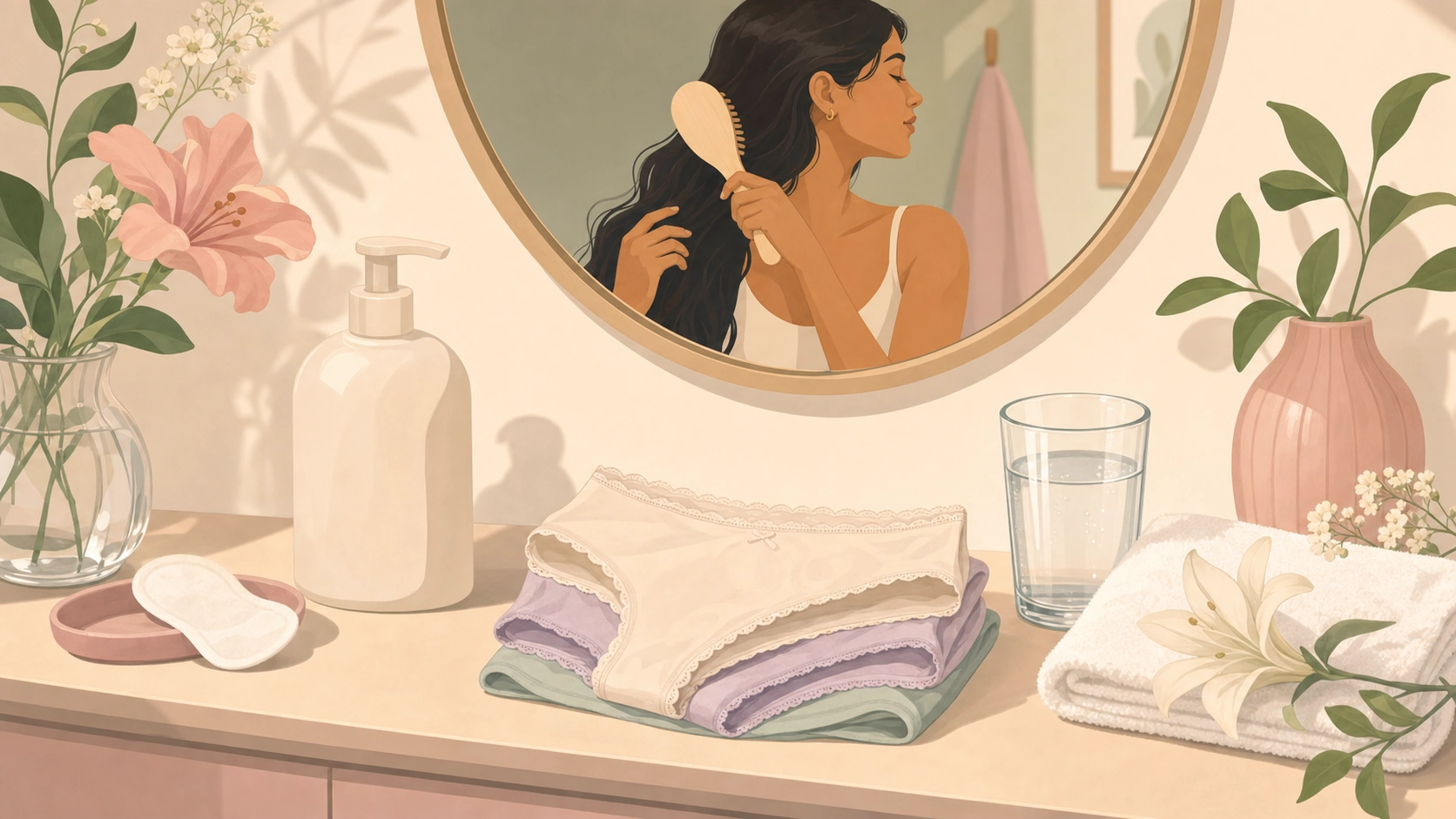
Intimate care does not need over-cleaning
The vagina has its own self-cleaning ability. Daily care should focus on reducing irritation, not trying to remove every scent or wash frequently.
Helpful habits:
- Gently clean the vulva with water. Avoid putting cleansing products inside the vagina.
- Avoid douching, intimate fragrances, deodorant sprays, and harsh wipes.
- Choose breathable underwear and change after sweating or exercise.
- Change period products regularly to reduce moisture and friction.
If you often feel the need to cover odor with scented products, it may be a sign of inflammation or microbiome imbalance. Medical care is better than repeated cleaning [1].
What FlowHer can help you observe
You can record discharge changes, itching, pain, sexual discomfort, and changes before or after your period together with cycle phase. This can help you tell:
- Whether it looks like common ovulation-related change or a repeated abnormal signal.
- Whether it relates to stress, sleep, period timing, sex, or a new care product.
- Whether you should bring clearer information to a clinician.