
FlowHerFlowHer
  • 简体中文
  • English
  • 简体中文
  • English
  • Understanding Your Cycle

    • How does your body work across the menstrual cycle?
    • What kind of menstrual cycle counts as "regular"?
    • Does an irregular period always mean something is wrong?
  • Body State

    • What is Body State, and why is it more important than dates?
    • What can a low Body State feel like?
    • Can Body State improve?
    • Body State Explained
  • Stress And Mental State

    • Stress is not just emotion: what is physical stress?
    • What is HRV, and why can it reflect your stress state?
    • How does stress disrupt menstrual rhythm?
    • Real-Time Stress Explained
  • Sleep And Recovery

    • Sleep Quality Explained
    • Sleep quality affects your period more than you think
    • How can better sleep support a healthier, more regular period?
  • PMS And Premenstrual Discomfort

    • What is PMS, and why does it feel different for everyone?
    • Why do mood swings, fatigue, and irritability happen before your period?
    • How can FlowHer help you prepare for PMS earlier?
  • Period Pain

    • Is period pain normal, and why does it vary each time?
    • How to ease period pain
    • The relationship between stress, sleep, and period pain
  • Nutrition, Weight And Movement

    • Why does appetite change before your period?
    • How to eat for a more comfortable period: iron, protein, and fiber
    • Should you worry about weight fluctuation around your period?
    • When is it better to move, and when is it better to rest?
  • Reproductive Health And Care

    • Vaginal discharge and intimate care: what changes are normal?
    • Ovulation body signs: discharge, temperature, and mild pain
    • HPV vaccine and cervical screening: what you need to know
  • Mental Health

    • Period-related low mood: when should you seek help?
  • Sexual Function Health

    • Why libido can change with the menstrual cycle
    • Pain with sex and cycle-related discomfort: when to pay attention
  • Body Health

    • Is breast tenderness before your period normal?
    • Period acne and skin changes: why breakouts happen at the same time
    • Are oily hair, shedding, and the menstrual cycle related?
  • When You Wonder If You Are Normal

    • When You Wonder, "Am I Normal?"
  • Product

    • FlowHer Product Overview
    • FlowHer Frequently Asked Questions
    • FlowHer User Agreement
    • FlowHer Privacy Policy

A woman discussing pain with sex and cycle discomfort in a therapy clinic

Pain with sex and cycle-related discomfort: when to pay attention

Sex should not hurt long term

Pain during sex is common, but common does not mean you should endure it. Pain may be felt around the vulva, vaginal opening, inside the vagina, lower abdomen, pelvis, lower back, or bladder area. It may be temporary or repeated [1].

Possible causes include:

  • Not enough lubrication or arousal
  • Vulvar skin irritation or contact dermatitis
  • Vaginitis or other infection
  • Vaginismus or pelvic floor tension
  • Endometriosis, ovarian cysts, pelvic inflammatory disease, or other gynecologic issues
  • Stress, fatigue, anxiety, trauma history, or relationship pressure [1][2]

Cycle-related clues

If pain is more noticeable before a period, during menstruation, or around ovulation, observe:

  • Whether period pain is getting worse.
  • Whether there is deep pain during sex or pelvic heaviness.
  • Whether there is abnormal bleeding, abnormal discharge, or fever.
  • Whether bowel movements, urination, or daily activities are affected.

Cyclically worsening pain can sometimes relate to endometriosis, pelvic inflammation, ovarian issues, or hormone-related tissue changes, and deserves clinical evaluation.


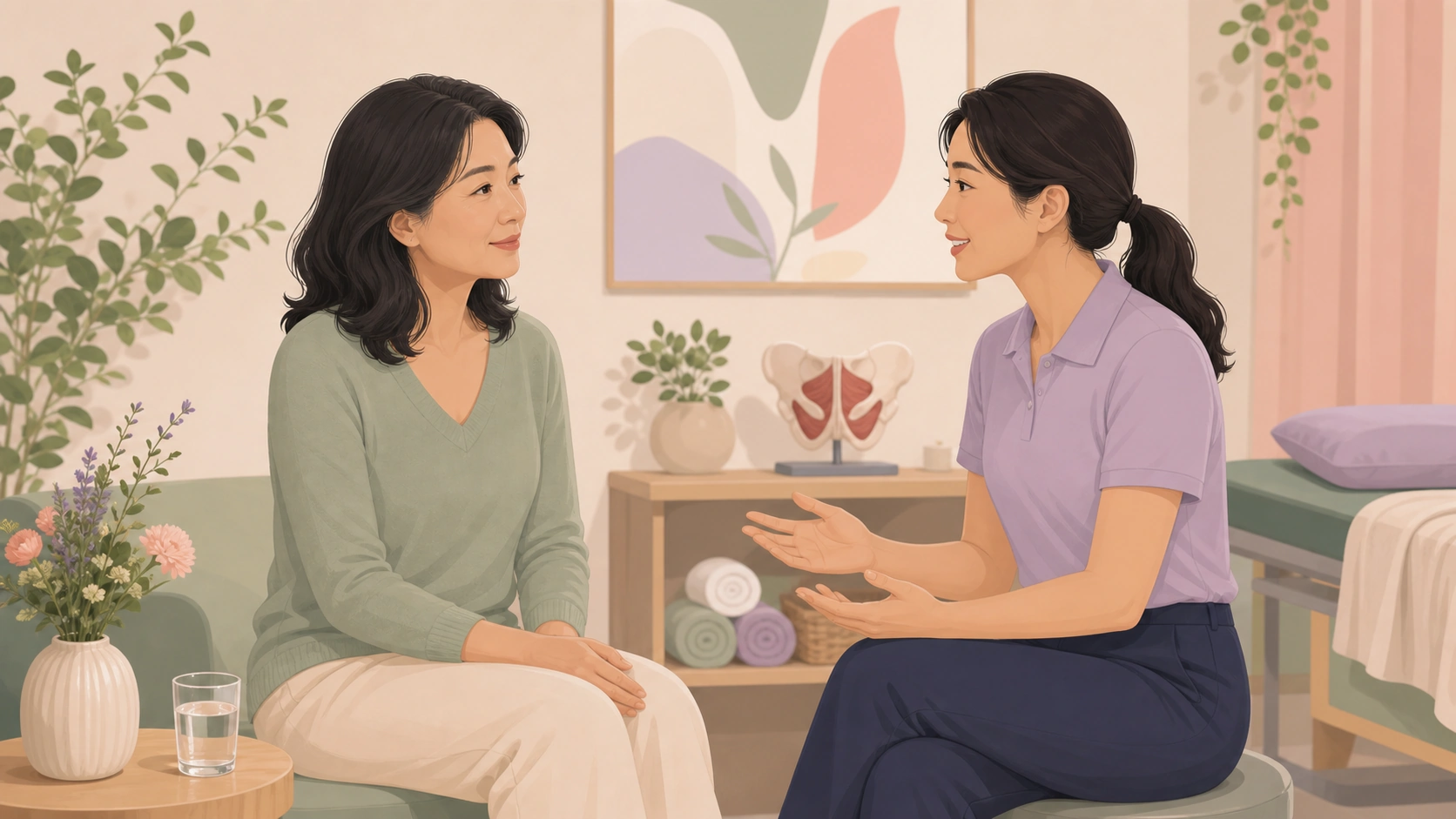
Two women gently communicating about discomfort and care support

What you can try first

If discomfort is occasional, mild, and related to dryness or tension, you can try:

  • Allowing more time for arousal.
  • Using water-based or silicone-based lubricant.
  • Avoiding scented cleansing products, douching, and irritating wipes.
  • Clearly communicating with your partner about where and when it hurts.
  • Choosing forms of intimacy that do not cause pain for now.

If pain is frequent, severe, persistent, or makes you afraid of sex, do not only endure it or repeatedly self-treat.


When to seek care

Consider seeing an ob-gyn or relevant professional if:

  • Pain during sex is frequent or severe.
  • Pain is gradually worsening.
  • It comes with abnormal bleeding, abnormal discharge, fever, or pelvic pain.
  • Pain is clearly cycle-related and affects life.
  • Lubrication, rest, and reducing irritation do not help.

References

  1. ACOG: When Sex Is Painful
  2. ACOG: Your Sexual Health
Last Updated: 5/3/26, 11:18 AM
Prev
Why libido can change with the menstrual cycle